 Musicians make frequent appearances in romance novels as main characters—what tips and tricks can you pick up from a fellow creative who uses music to tell his stories instead of novels? In this workshop, you’ll learn a few basic formats to help you write your own lyrics for use in your books. You’ll also pick up strategies to condense a feeling or mood into a single line—perfect for chapter openings, revealing a plot twist, or the last sentence in a chapter to keep your readers turning pages. We’ll talk about some ways to get beyond creative blocks and find new sources of inspiration, and have plenty of time for questions. Throughout the journey we will acquire a new understanding of how fit a grand picture into a snapshot. Be prepared to take a trip into wonderland… Well, the warped mind of an always aspiring to evolve musician.
BIO:
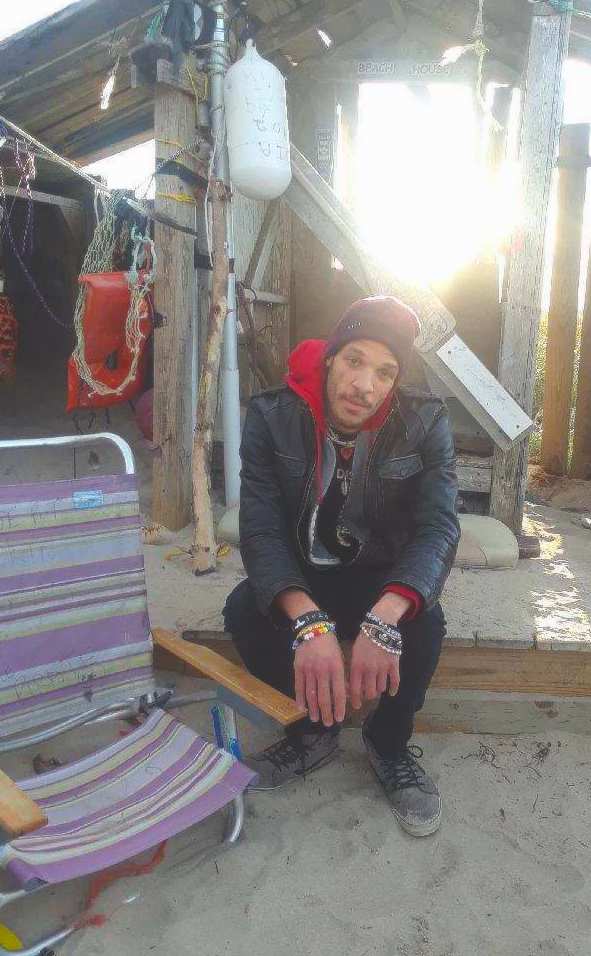
Paul Pitman is a self-described generalist with a personality that can most simply be described as eclectic. The pursuit of self-evolution and the desire to entertain has given him a diverse background in athletics, music, film, restaurants, marketing, and promotions. Paul first discovered his desire to perform and entertain at a young age by soaking in the drama, flair and athleticism of professional wrestling in addition to the bombastic sound, attitude, style and larger than life personalities of early MTV. Initially attracted to being a lyricist/ front person by the likes of Scott Weiland, Axl Rose, Steven Tyler, and Jim Morrision, he’s also inspired by the fashion and theatrics of David Bowie as well as the principles of songwriting by artists such as Tom Petty. Paul has used this combination of influences to collaborate with various local and national artists. Presently Paul is chasing his dreams and goals with more vigor than ever while balancing a sixty plus hour work week with family and friends. He’s using his creative and life experiences coupled with meeting and seeing the best and worst of people on a daily basis as fuel towards his next step in storytelling and entertaining through the medium of music.
 Ever wanted to see your stories on the big screen? Or on a smaller screen (Call me, Netflix!)? We’ll talk about the structure of a screenplay, how it differs from a novel, how to start from scratch vs. adapting one of your existing pieces for the screen, and how the production process is different from book publishing.
 A will or trust controls who inherits what. The Final Letter tells your heir(s) ways to maintain it, even make it thrive, once they’ve got it.
 Over eighty percent of bestselling historical romance books published in the first half of 2018 were set in Britain, either during the 19th century or the medieval period. These two fabricated chronotopes are selectively accurate to history and narrowly focused on high ranks of the nobility—in other words, they are “escapism.” This presentation will consider what escapism means in this context, who it serves, and who it harms. While any reader can enjoy a good duke Regency every once in a while, the net impact of the most popular chronotopes may be to corrode our understanding of history, marginalize anyone writing from a wider palette of settings and characters, and exclude authors of color.
 Please join the New England Chapter of Romance Writers of America® in congratulating the finalists in the 2019 New England Readers’ Choice contest! At the
 Author-At-Large: Face-